Business Trip Scheduling Strategies to Maximize Productivity sets the stage for this enthralling narrative, offering readers a glimpse into a story that is rich in detail and brimming with originality from the outset.
Efficiently planning business trips is not just about reaching your destination; it's about optimizing every moment to ensure productivity and success. From scheduling tools to time management techniques, this guide covers all you need to know to make the most of your business travels.
Importance of Business Trip Scheduling
Effective trip scheduling is crucial for maximizing productivity in a business setting. Properly planned and organized trips can lead to optimized use of time, resources, and energy, resulting in better outcomes and increased efficiency.
Negative Impact of Poor Scheduling
Poor scheduling can have detrimental effects on business outcomes. For example, overlapping meetings or appointments can lead to missed opportunities or delays in decision-making processes. Additionally, inadequate time allocated for travel or rest can result in fatigue and decreased performance during important business engagements.
Tips for Prioritizing Tasks
- Identify the most critical objectives of the trip and prioritize tasks that align with these goals.
- Use tools and technology to help plan and schedule activities, such as calendar apps or project management software.
- Delegate tasks when possible to ensure that responsibilities are distributed effectively and efficiently.
- Allow buffer time in the schedule for unexpected delays or emergencies that may arise during the trip.
- Regularly review and adjust the schedule as needed to accommodate changes in priorities or unforeseen circumstances.
Strategies for Efficient Travel Planning
Planning a business trip efficiently is crucial to maximize productivity and minimize stress. By utilizing the right tools and technology, creating a detailed itinerary, and leveraging travel apps, you can streamline the process and ensure a successful trip.
Tools and Technology for Organizing Travel Itineraries
Utilizing tools such as travel management platforms, calendar apps, and project management software can help in organizing travel itineraries efficiently. These tools allow you to centralize all trip-related information, including flights, accommodations, and meetings, in one place for easy access and reference.
Benefits of Using Travel Apps for Scheduling
Travel apps are invaluable for scheduling flights, accommodations, and meetings. They offer real-time updates, notifications, and reminders, helping you stay on top of your itinerary. Additionally, these apps often provide recommendations for local restaurants, transportation options, and sightseeing opportunities, enhancing your overall travel experience.
Best Practices for Creating a Detailed Agenda
When creating a detailed agenda for your business trip, consider including important information such as flight details, hotel reservations, meeting schedules, and contact information for key individuals. Organize your agenda in a structured format, including time blocks for each activity, to optimize your time during the trip effectively.
Time Management Techniques
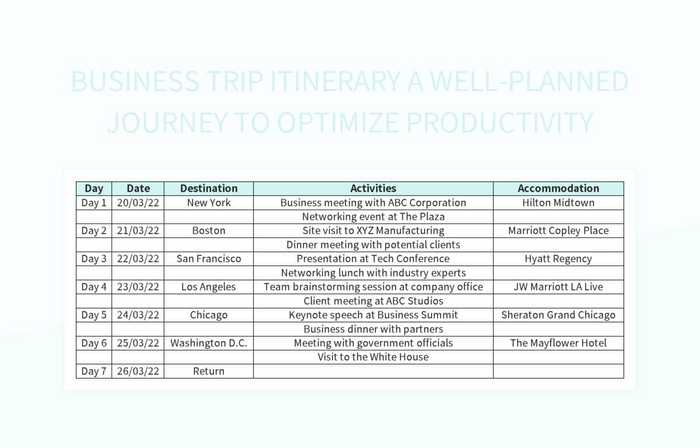
In the context of business trips, effective time management is crucial for maximizing productivity and achieving a balance between work responsibilities and personal time. Setting realistic goals and timelines, as well as scheduling buffer time for unexpected delays or emergencies, are key strategies to ensure a successful and stress-free trip.
Balancing Work Responsibilities and Personal Time
- Allocate specific time slots for work-related tasks, meetings, and networking events.
- Set boundaries to prevent work from encroaching on personal time, such as designating certain hours for relaxation or leisure activities.
- Prioritize tasks based on importance and deadlines to manage time effectively.
- Delegate tasks when possible to lighten your workload and free up time for personal activities.
Setting Realistic Goals and Timelines
- Break down larger projects into smaller, manageable tasks with clear deadlines.
- Estimate the time needed for each task realistically to avoid overcommitting and feeling overwhelmed.
- Use tools like calendars, planners, or project management software to track progress and stay organized.
- Regularly review and adjust your goals and timelines as needed to adapt to changing circumstances.
Scheduling Buffer Time for Unexpected Delays
- Include extra time in your itinerary for transportation delays, last-minute changes, or unforeseen emergencies.
- Anticipate potential disruptions and plan accordingly to minimize the impact on your schedule.
- Stay flexible and adaptable to handle unexpected situations without causing significant disruptions to your plans.
- Communicate proactively with colleagues or clients about any schedule adjustments due to unforeseen circumstances.
Maximizing Productivity on the Road
Traveling for business can often disrupt your usual routine and make it challenging to stay productive. Here are some strategies to help you maximize productivity while on the road.
Staying Focused and Avoiding Distractions
When traveling for business, it's essential to minimize distractions to stay focused on your work. Here are some tips to help you achieve this:
- Avoid multitasking: Focus on one task at a time to maintain productivity.
- Use noise-canceling headphones to block out distractions in noisy environments.
- Create a designated workspace in your hotel room or at the airport to work without interruptions.
- Limit non-essential phone calls and emails to avoid distractions.
Maintaining Communication with Team and Clients
Effective communication is key while on a business trip to ensure you stay connected with your team and clients. Here are some strategies to maintain communication:
- Schedule regular check-in calls or video conferences with your team to provide updates on your progress.
- Use collaboration tools like Slack or Microsoft Teams to stay connected and share documents in real-time.
- Inform clients of your travel schedule in advance and set clear expectations for communication during your trip.
Incorporating Downtime for Relaxation and Self-Care
While productivity is important, it's also crucial to take breaks and prioritize self-care to avoid burnout. Here are some tips for incorporating downtime into your business trip:
- Schedule short breaks throughout the day to recharge and avoid fatigue.
- Engage in activities like meditation, yoga, or a quick workout to reduce stress and boost productivity.
- Explore the local area during your downtime to relax and unwind, which can help improve focus when you return to work.
Final Conclusion
In conclusion, mastering the art of business trip scheduling can truly transform the way you work and travel. By implementing the strategies discussed here, you'll not only enhance your productivity on the road but also find a better balance between work and personal time.
Take charge of your travel plans and watch your efficiency soar to new heights.
FAQ
How can I prioritize tasks effectively when planning a business trip?
It's essential to categorize tasks based on urgency and importance, focusing on critical objectives first to ensure a successful trip.
What are some useful tools for organizing travel itineraries?
Popular tools like TripIt and Google Trips can help streamline your travel plans, providing a centralized platform for all your trip details.
How do I strike a balance between work responsibilities and personal time during business trips?
Allocate specific time slots for work tasks and personal activities, ensuring you prioritize both aspects without compromising on either.
Why is scheduling buffer time important for business trips?
Buffer time allows flexibility to account for unexpected delays or emergencies, ensuring you can adapt to changing circumstances without disrupting your entire itinerary.