Delve into the realm of business travel technology that revolutionizes compliance, offering a seamless blend of innovation and regulatory adherence. As organizations navigate the intricate landscape of corporate travel, the integration of advanced technological solutions emerges as a pivotal game-changer.
The following paragraphs elucidate the significance of leveraging technology to ensure compliance in business travel, shedding light on key features, challenges, and implementation strategies.
Overview of Business Travel Technology
Business travel technology refers to the use of digital tools and platforms to streamline and optimize the process of managing corporate travel activities. It encompasses a wide range of software, applications, and solutions designed to enhance efficiency, convenience, and compliance in business travel.
Importance of Technology in Managing Business Travel
Technology plays a crucial role in managing business travel by providing organizations with the necessary tools to plan, book, track, and analyze travel-related expenses and activities. It helps streamline processes, improve visibility, and ensure compliance with corporate travel policies and regulations.
Benefits of Using Technology for Business Travel Compliance
- Automated Expense Tracking: Business travel technology allows for the automatic tracking of expenses incurred during trips, making it easier to monitor and report on travel costs.
- Policy Enforcement: Technology can help enforce corporate travel policies by flagging non-compliant bookings, ensuring adherence to guidelines and regulations.
- Real-time Updates: With technology, travelers receive real-time updates on itinerary changes, travel alerts, and policy reminders, enhancing communication and compliance.
- Data Analysis: Technology enables the analysis of travel data to identify trends, optimize travel spend, and make informed decisions for future trips.
- Enhanced Security: Utilizing technology for business travel can improve security measures, such as tracking employee locations, ensuring duty of care, and providing emergency assistance when needed.
Compliance Challenges in Business Travel

When it comes to business travel, ensuring compliance with company policies and regulations can be a major challenge. Employees may unknowingly violate travel policies, leading to potential risks and financial implications for the company.
Identifying Common Compliance Issues
- Lack of adherence to travel policies: Employees may book accommodations outside of the approved channels or fail to submit expense reports on time.
- Non-compliance with travel security protocols: Ignoring safety measures or traveling to high-risk destinations without proper approval can pose serious risks.
- Failure to follow budget guidelines: Overspending on travel expenses or upgrading to premium services without authorization can impact the company's financial health.
Impact of Non-Compliance
- Financial penalties: Violating travel policies can result in fines or penalties that add up over time, affecting the company's bottom line.
- Reputational damage: Non-compliance with travel regulations can tarnish the company's reputation and credibility in the industry.
- Lack of duty of care: Failure to ensure employee safety during business travel can lead to legal liabilities and moral implications for the company.
Role of Technology in Addressing Compliance Challenges
- Automated policy enforcement: Travel technology solutions can help enforce compliance by flagging policy violations at the booking stage and offering alternative options.
- Expense tracking and reporting: Tools that automate expense reporting streamline the process, ensuring timely submission and adherence to budget guidelines.
- Real-time alerts and notifications: Technology can provide employees with safety alerts, travel advisories, and reminders to follow security protocols during their trip.
Features of Technology Improving Compliance
Business travel technology has evolved to include features that help improve compliance with company policies and regulations. These features not only ensure adherence to guidelines but also streamline processes for both travelers and managers.
Key Features Enhancing Compliance
- Policy Enforcement: Travel technology can enforce company policies automatically, flagging non-compliant bookings and prompting users to make necessary adjustments.
- Approval Workflows: Automated approval workflows ensure that travel requests are reviewed by the appropriate personnel, reducing the chances of unauthorized bookings.
- Expense Tracking: Tools that track expenses in real-time help monitor spending against budgets and policy limits, ensuring compliance with financial guidelines.
- Integration Capabilities: Integration with other systems, such as HR or finance, allows for seamless data exchange and accurate reporting for compliance purposes.
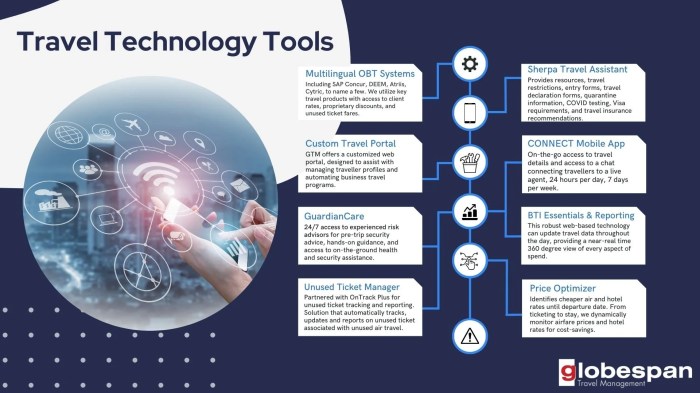
Examples of Software or Tools
Popular travel management software that incorporate compliance-enhancing features include:
- Concur:Offers policy enforcement, approval workflows, and expense tracking functionalities in a user-friendly interface.
- SAP Travel OnDemand:Provides integration capabilities with SAP ERP systems for comprehensive compliance reporting.
- Expensify:Streamlines expense reporting and reimbursement processes, ensuring adherence to company policies.
Automation Streamlining Compliance Processes
Automation plays a crucial role in streamlining compliance processes by reducing manual interventions and human errors. By automating policy enforcement, approval workflows, and expense tracking, travel technology helps ensure that compliance is maintained consistently across all travel activities.
Implementing Business Travel Technology
Implementing business travel technology for compliance requires careful planning and execution to ensure successful integration within the organization. This involves several key steps that need to be followed to maximize the benefits of the technology.
Steps to Successfully Implement Travel Technology for Compliance
- Identify the needs and goals: Before implementing any travel technology, it is essential to clearly identify the compliance requirements and objectives that the technology should address.
- Research and select the right technology: Conduct thorough research to find the technology solution that best fits the organization's needs and budget. Consider factors such as user-friendliness, scalability, and integration capabilities.
- Develop a detailed implementation plan: Create a comprehensive plan outlining the timeline, resources, and responsibilities for implementing the technology. This will help ensure a smooth transition and minimize disruptions.
- Provide adequate training: Training employees on how to use the new technology is crucial for successful implementation. Offer training sessions and resources to ensure staff are proficient in utilizing the technology for compliance purposes.
- Monitor and evaluate performance: Regularly assess the effectiveness of the technology in improving compliance. Collect feedback from users and analyze data to identify any areas for improvement or optimization.
Importance of Training Employees on New Technology
Providing training to employees on new travel technology is essential to ensure smooth adoption and utilization. Proper training can help employees understand the benefits of the technology, increase efficiency in compliance processes, and reduce the risk of errors or non-compliance issues.
How to Evaluate the Effectiveness of Technology Solutions
- Collect feedback from users: Gather input from employees using the technology to understand their experiences, challenges, and suggestions for improvement.
- Analyze compliance data: Review compliance data to assess whether the technology has helped in achieving compliance goals and identify any areas of non-compliance that need to be addressed.
- Compare performance metrics: Measure key performance indicators before and after implementing the technology to evaluate its impact on compliance processes and outcomes.
- Conduct regular audits: Perform periodic audits to ensure that the technology is being used effectively and that compliance standards are being met consistently.
Closing Summary
In conclusion, the fusion of business travel technology and compliance not only optimizes operational efficiency but also fortifies regulatory adherence. By embracing cutting-edge tools and strategies, organizations can navigate the complexities of travel compliance with precision and ease, fostering a culture of seamless business travel practices.
Query Resolution
What are the key benefits of using technology for business travel compliance?
Implementing technology in business travel compliance enhances efficiency, accuracy, and transparency, allowing organizations to streamline processes and ensure regulatory adherence.
How can automation streamline compliance processes in business travel?
Automation in compliance processes can automate repetitive tasks, reduce human error, and improve data accuracy, ultimately enhancing efficiency and compliance management.
What are the steps to successfully implement travel technology for compliance?
Successful implementation involves assessing organizational needs, selecting appropriate technology solutions, providing comprehensive training to employees, and regularly evaluating the effectiveness of the implemented tools.