Delving into the realm of Business Travel Sustainability Practices, we uncover the crucial role sustainability plays in modern travel for businesses. From eco-friendly transportation options to green accommodation choices, this topic offers a comprehensive look at integrating sustainability into corporate travel.
Overview of Business Travel Sustainability Practices
Sustainability in business travel plays a crucial role in minimizing the environmental impact of travel activities while also promoting social responsibility and cost-effectiveness.
Examples of Sustainable Practices
- Utilizing video conferencing and virtual meetings to reduce the need for frequent business trips.
- Choosing eco-friendly modes of transportation such as trains or electric vehicles for travel.
- Opting for green accommodations that prioritize energy efficiency and waste reduction.
Benefits of Integrating Sustainability
- Reduction of carbon footprint and overall environmental impact.
- Enhancement of brand reputation and corporate social responsibility image.
- Cost savings through efficient resource utilization and waste reduction.
Sustainable Transportation Options
When it comes to business travel, opting for sustainable transportation options is crucial in reducing the environmental impact of your journeys. Let's explore and compare different eco-friendly modes of transportation and their effects on the environment.
Comparing Eco-Friendly Transportation Modes
There are several sustainable transportation options available for business travelers, each with its own impact on the environment. Let's delve into the details and compare them:
| Transportation Mode | Carbon Footprint |
|---|---|
| Electric Car | Lowest |
| Public Transport | Moderate |
| Bicycle | Very Low |
| Walking | Negligible |
Green Accommodation Choices
When it comes to sustainable business travel practices, choosing environmentally friendly accommodation is crucial. Not only does it reduce your carbon footprint, but it also supports businesses that prioritize eco-friendly initiatives.
Identifying Sustainable Accommodation Options
- Look for hotels with green certifications such as LEED or Green Key.
- Research eco-friendly accommodations that use renewable energy sources.
- Consider staying in boutique hotels or eco-lodges known for their sustainability efforts.
Criteria for Selecting Environmentally Friendly Hotels
- Check if the hotel has implemented energy-saving measures like LED lighting and energy-efficient appliances.
- Ensure the hotel has a recycling program in place for waste management.
- Look for hotels that support local communities and source organic, locally produced food.
Tips to Reduce Energy Consumption and Waste
- Conserve energy by turning off lights, electronics, and air conditioning when not in use.
- Opt for reusing towels and linens to reduce water and energy consumption from laundry.
- Avoid single-use plastics and bring your reusable water bottle and shopping bag.
Sustainable Packing and Waste Management
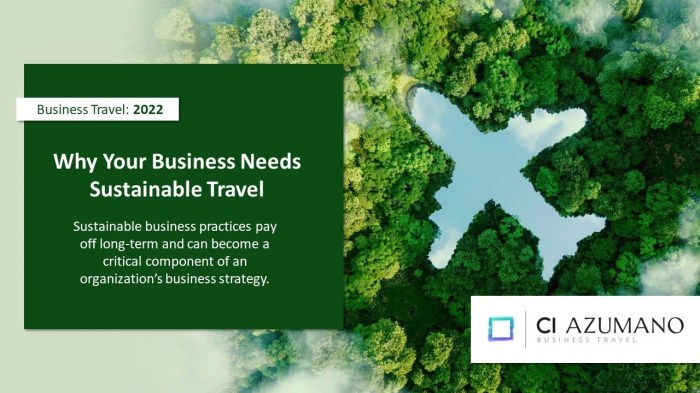
When it comes to business travel sustainability practices, sustainable packing and waste management play a crucial role in reducing the environmental impact of your trips.
Guidelines for Sustainable Packing
When packing for your business trips, opt for durable and reusable luggage to minimize waste. Pack versatile clothing items that can be mixed and matched to reduce the number of clothes you need to bring. Consider packing travel-sized eco-friendly toiletries to minimize plastic waste.
Strategies for Waste Reduction
- Avoid single-use plastics by bringing a reusable water bottle and shopping bag.
- Opt for digital copies of documents and maps to reduce paper waste.
- Dispose of waste responsibly by recycling or using designated bins.
Eco-Friendly Products for Sustainable Travel
- Bamboo toothbrushes
- Reusable silicone food storage bags
- Solar-powered chargers
- Biodegradable travel utensils
Ending Remarks

In conclusion, Business Travel Sustainability Practices are not just a trend but a necessity in today's world. By embracing sustainable practices, businesses can reduce their carbon footprint and contribute to a greener future.
FAQ Guide
What are the key benefits of integrating sustainability into business travel?
Integrating sustainability into business travel not only reduces environmental impact but also enhances brand reputation and employee satisfaction.
How can travelers reduce energy consumption and waste while staying in hotels?
Travelers can reduce energy consumption and waste by opting for hotels with eco-friendly practices, reusing towels, and turning off lights and electronics when not in use.
What are some eco-friendly products that can aid in sustainable travel practices?
Eco-friendly products like reusable water bottles, bamboo utensils, and biodegradable toiletries can help travelers reduce their environmental footprint.